


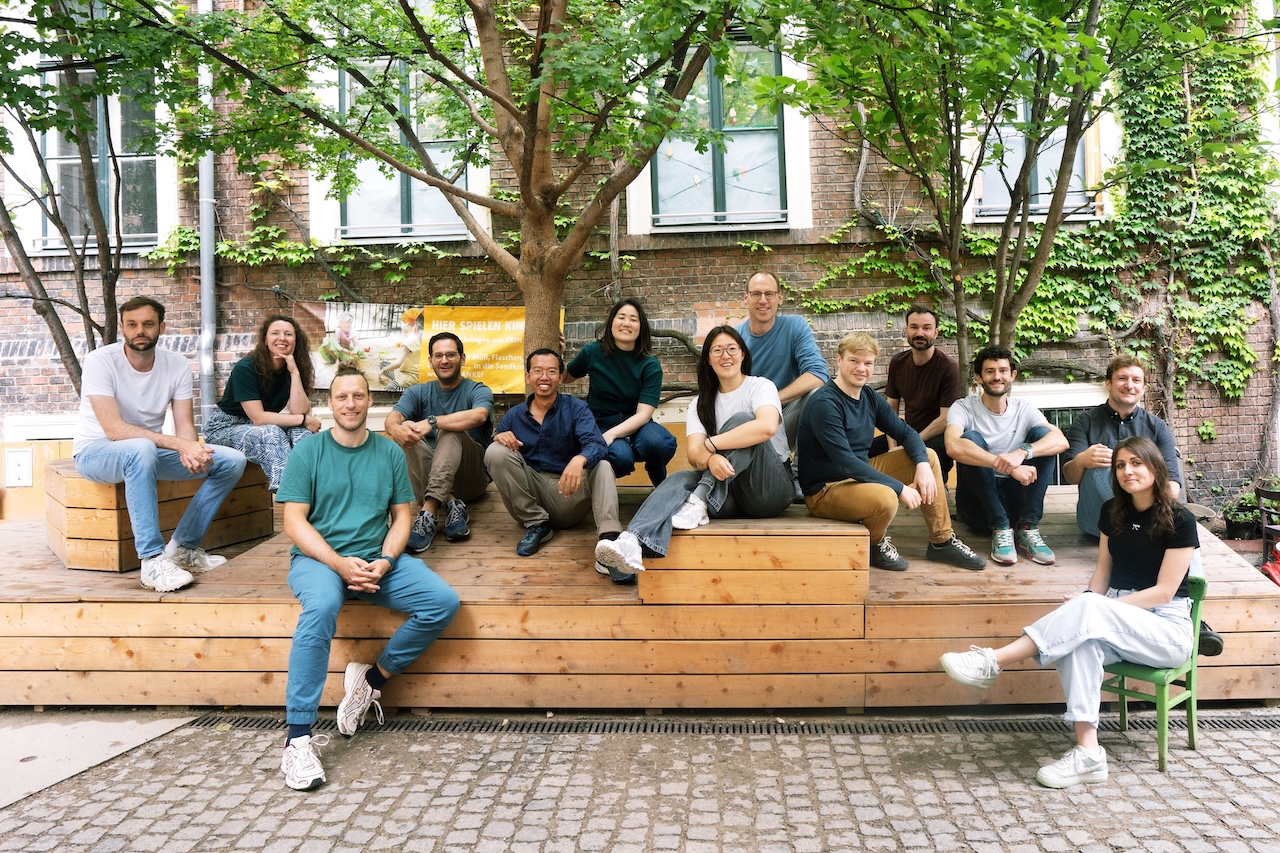
Graph Therapeutics, a Vienna-based drug discovery company, has closed a $5 million investment that brings its total funding to over $10 million. The company uses live patient immune cells and machine learning to identify what actually drives inflammatory and immune-mediated diseases, with the goal of developing more precise medicines for conditions that have long resisted effective treatment. Gregory Vladimer, PhD, co-founder and CEO, leads the team alongside co-founders Bojan Vilagos as CSO, Robert Sehlke as CTO, and Christophe Boudesco as VP of Immunology.
The inflammation and immunology drug market is one of the largest in life sciences. The global immunology market was valued at $112.26 billion in 2025 and is projected to reach $228.18 billion by 2034, at a compound annual growth rate of 8.02%. Yet those numbers have not made the science any easier. The failure rate for new drugs in immunology and inflammation can reach as high as 95%, one of the worst in all of medicine.
The root of the problem is well understood, if still largely unsolved. Most drug candidates are tested using simplified models that do not accurately represent what happens inside a real patient's immune system. By the time a drug reaches Phase II clinical trials, it is often tested against human biology for the first time at scale, and that is where many candidates break down. Researchers sometimes call this stage the "valley of death" because promising drugs frequently fail to demonstrate sufficient efficacy there, despite years of earlier work.
Graph's $5 million investment was led by Daphni, a Paris-based venture capital firm. The round includes continued participation from existing investors SquareOne, Merantix Capital, and NAVEC Investment Management, along with non-dilutive grant funding from the Austrian Research Promotion Agency (FFG) and the Austria Wirtschaftsservice (AWS).
The company's platform works differently from most preclinical drug discovery approaches. Rather than relying on cell lines or animal models, Graph collects live immune cells directly from patients and tests drug candidates against them in the laboratory. The results are combined with multi-omics data, a research method that captures information from multiple biological layers at once, including genes, proteins, and metabolites. Machine learning models then analyze all of that data to identify which mechanisms are actually driving disease and which drug candidates are most likely to work.
"Graph exemplifies the next generation of techbio: a company where deep technological innovation is inseparable from rigorous R&D, led by a team with a proven track record in precision medicine." — Sofia Dahoune, Partner at Daphni
This matters because immune diseases are not uniform across patients. Two people with the same diagnosis can have quite different biological causes underlying their condition, which is part of why treatments that work for one person may not work for another. Graph's platform is built to capture that variation at scale, with the aim of identifying drug targets and biomarkers that are grounded in real patient data before clinical trials begin.
The funding will support Graph's internal drug discovery programs across several inflammation and immunology disease indications. The company says its platform is now producing biological insights precise enough to directly inform those programs, a step forward from its earlier focus on validating the platform itself. Graph is also looking at out-licensing opportunities and partnerships as a way to generate value from the platform beyond its own pipeline.
"Graph's platform has reached a critical inflection point as we are now generating actionable biological insights that directly inform our own drug discovery programs. Daphni's conviction in our approach is a powerful signal as we begin to scale investment into asset programs. With their support alongside our existing investors, we have both the backing and the urgency to pursue precision medicines in I&I, and to show the industry that rigorously decoding immune dysfunction in real patient cells reveals what actually drives disease." — Gregory Vladimer, PhD, Co-founder and CEO of Graph Therapeutics
Graph also holds non-dilutive grants from Austria's FFG Austrian Life Sciences program and the AWS Deep Tech Life Sciences Seed Financing program. These government-backed awards reflect independent scientific review of Graph's approach and the strength of Austria's public funding infrastructure for deep tech life sciences companies.
Several members of Graph's founding team previously worked at Allcyte, a Vienna-based company that built a platform for predicting cancer treatment outcomes using AI-driven analysis of live patient tumor samples. Vladimer served as CSO and scientific co-founder of Allcyte, and Sehlke led its computational platform development. Allcyte was acquired by Exscientia, a clinical-stage pharmatech company, with the acquisition allowing Exscientia to evaluate individual patient biology in primary tumor tissues rather than artificial cell line or animal models.
Graph applies that experience to immunology. The platform uses what the company calls a "lab-in-the-loop" approach, where AI-driven experimental design and high-throughput laboratory work feed into each other continuously. Patient immune cells are exposed to drug candidates and other stimuli, and the resulting biological responses are recorded and used to train the machine learning models. Over time, those models become better at separating disease mechanisms that are common across patients from those that are specific to smaller subgroups.
Graph's first institutional round, which closed in early 2025, was led by SquareOne and Merantix Capital, with participation from NAVEC Investment Management and strategic angel investors. The new $5 million brings total funding, including non-dilutive grants, to over $10 million.
Daphni, the lead investor in this round, is a Paris-based firm that backs early-stage European tech startups from seed to Series A. Its portfolio includes unicorns Swile and Back Market, and the firm has been expanding into life sciences and deep tech through its Daphni Blue fund, which closed at €260 million above its initial target. Graph's investment comes from that fund. Merantix Capital is a Berlin-based early-stage firm focused on AI-native companies in healthcare, life sciences, and enterprise software. SquareOne, also based in Berlin, focuses on pre-seed and seed-stage B2B technology companies across Europe.


