








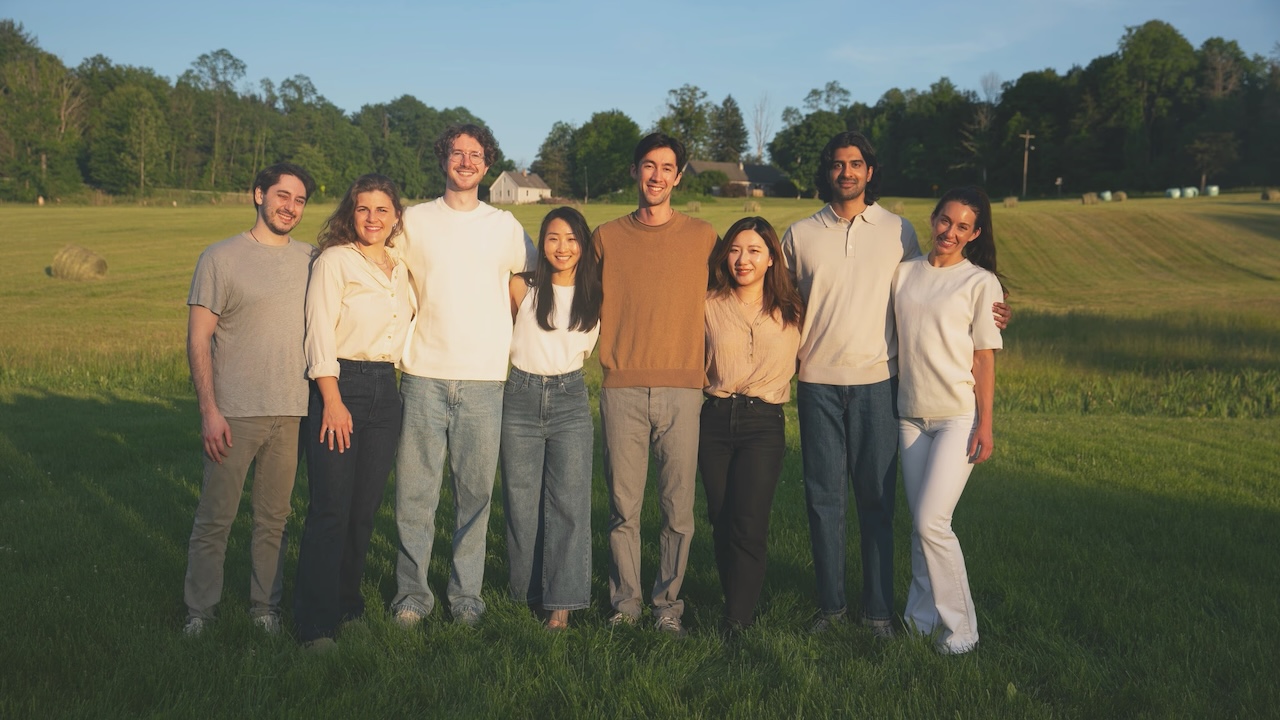
Hera, a startup creating a new kind of senior care worker supported by AI, is making a simple bet: families looking after aging parents need a steady human guide through the healthcare system, not another app to manage on their own. The company was founded by CEO Jenny Lee, who started Hera after watching her aunt struggle to manage care for their grandmother, who had dementia.
That kind of struggle is common. According to the NIH, roughly 83% of the help given to older adults in the United States comes from family members, friends, or other unpaid caregivers. In most cases, it falls to an untrained relative, not a clinician, to figure out what happens after a doctor's visit. That means booking the right specialist after a stroke, making sure new prescriptions are filled correctly, arranging home medical equipment after a hospital stay, or untangling Medicare and Medicaid paperwork.
This kind of demand is also growing for a simple reason tied to demographics. The U.S. population age 65 and older reached 61.2 million in 2024, up 3.1% from the year before. Senior housing occupancy reached 89.5% in the first quarter of 2026, even as new construction has stalled. Together, these numbers point to a system that is having a harder time keeping up with how many older adults now need support.
Hera announced $27 million in Series A funding to help close that gap. The round was led by Bain Capital Ventures, with continued participation from existing investors Accel and IA Ventures, along with angel investors including the chief financial officer of Mount Sinai.
The funding arrives at a moment when both the senior care industry and the wider caregiving market are under pressure to change how they operate. Health systems are looking for better ways to support patients once they leave a clinical setting, and Hera already works with referring physicians at several major academic medical centers, including Weill Cornell, NYU Langone, Mount Sinai, USC, and UCSF.
The numbers help explain why. The U.S. elderly and disabled services industry is valued at $82.5 billion in 2026. Separately, the broader senior care sector is expected to face a shortage of 1.2 million healthcare workers by 2030. Those two pressures, rising costs and a shrinking workforce, are part of what is drawing investor interest to companies trying to make care coordination more efficient.
Bain Capital Ventures Partner Alysaa Co described the investment as a bet on an area technology has largely struggled to reach.
"Healthcare navigation for aging families has remained painfully analog because the most valuable context outside the four walls of the hospital has never been captured in systems. Hera's AI platform doesn't just surface options—it learns what actually helps families. Jenny and the Hera team bring the rare combination of personal conviction, technical depth, and operational expertise needed from their experience at Headway and Palantir to scale this platform nationally and improve how families access care across the U.S." — Alysaa Co, Partner at BCV
Hera plans to use the new funding to keep building its AI platform, called Juno, and to expand into states where it does not yet operate. The company is moving into California, Florida, Maryland, Pennsylvania, and Massachusetts, with a goal of being live in more than 25 states by the end of the year. Since launching a year ago, Hera says it has brought ongoing care coordination to more than 1,000 families, with a 95% retention rate.
Juno sits at the center of that growth plan. It is designed to capture the kind of fragmented, hyper-local knowledge that has usually lived only in individual caregivers' heads. That might mean knowing which cardiologist has an opening next week, or how to get extra home care approved through Medicaid. The system is meant to improve over time, drawing on real outcomes from families it has already worked with.
CEO Jenny Lee described the core problem Hera is trying to solve as one of access, not demand.
"I watched my aunt—the alpha daughter of our family—break down managing the care for my grandmother with dementia. This problem hasn't gone unsolved because of a lack of demand, but because critical caregiving knowledge lives in scattered human experience. While most AI companies are building for the Fortune 500, we're using frontier technology to bring that expertise to everyday families." — Jenny Lee, Co-founder and CEO of Hera
Hera was built around what it calls the "last mile" of healthcare: the non-clinical work that happens after a medical appointment ends, but that still decides whether an older adult stays healthy and safe at home. The company compares this gap to other complex systems that already have trained specialists people can turn to. A lawyer handles legal matters. TurboTax handles taxes. A financial advisor handles money. A travel agent handles trips. Hera argues healthcare has lacked an equivalent for the work that happens once a patient leaves the doctor's office.
To fill that role, Hera created a position it calls the Hero. A Hero is typically a nurse or licensed social worker with deep experience in geriatric care, working alongside the Juno platform, which handles administrative tasks like documentation and billing. Heroes coordinate across specialists, manage medications, help families apply for benefits, and advocate on a family's behalf. According to the company, a Hero completes an average of 15 tasks per family each month. Eligible Original Medicare beneficiaries can access these services at no out-of-pocket cost, since the program is structured to be covered by insurance.
A geriatrician who works with Hera's care teams described the effect on her own day-to-day practice.
"The partnership with Hera has been transformative for my clinical practice in geriatric primary care. Hera's Heroes have empowered me as a provider to restore a sense of confidence in the physician-patient partnership. The nation is aging and we need innovative solutions to tackle the most challenging issues in aging today." — Dr. Lien, Geriatrician at Weill Cornell
Bain Capital Ventures led the round. Accel and IA Ventures, both already investors in Hera, also took part, alongside several angel investors, including the CFO of Mount Sinai. Bain Capital Ventures is a venture capital firm that invests in technology and healthcare startups, with a portfolio that includes companies across fintech, security, and AI applications.






