Starcloud, the space infrastructure startup developing orbital data centers, has raised a $170 million Series A at a $1.1 billion valuation. The round more than doubles the size of the next largest Series A in Y Combinator history and brings the company's total capital raised to $200 million. Benchmark led the initial tranche, with EQT co-leading an extension round alongside them.
The financing was heavily oversubscribed and drew a broad set of institutional and strategic backers. These include Macquarie Capital, the world's largest infrastructure fund with $500 billion in assets under management, alongside NFX, Nebular, Y Combinator, Adjacent, 776 Ventures, Fuse Ventures, Manhattan West, and Monolith Power Systems. Angel investors joining the round include former Boeing CEO Dennis Muilenburg, former Starbucks CEO Kevin Johnson, and General Stephen Wilson.
The global push for AI compute is running into a physical ceiling. Building new data centers and energy projects on Earth can take up to five years, between permitting, construction, and grid connection. The bottleneck is not capital. It is space and energy.
Starcloud's answer is to move the infrastructure off the planet. In low Earth orbit, solar energy is abundant, continuous, and available at a scale that no terrestrial location can match. By building data centers there, the company bypasses land-use restrictions, utility negotiations, and grid constraints entirely.
"The AI revolution is colliding with the physical limits of our terrestrial energy grid," said Philip Johnston, Co-Founder and CEO of Starcloud. "We are quickly running out of places to build new energy projects for data centers on Earth. By moving AI compute to space, we unlock access to unlimited solar power and completely remove the energy bottleneck. This funding allows us to rapidly scale our orbital infrastructure and meet the massive commercial demand for sustainable AI compute."
The company will use the new funding to accelerate development of its next-generation Starcloud-3 satellites, establish a dedicated manufacturing facility, expand its team, and secure future launch contracts.
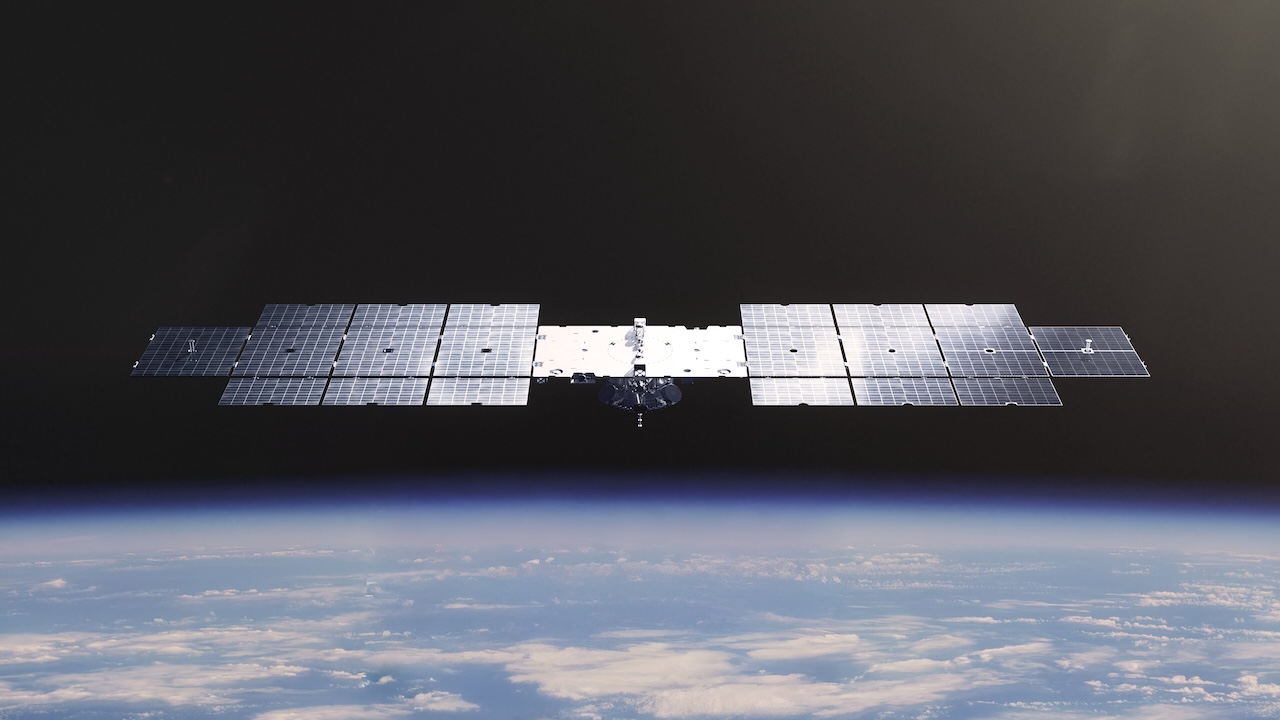
Later in 2025, Starcloud will launch Starcloud-2, which will feature the largest commercial deployable radiator ever sent to space and generate 100 times the power of Starcloud-1. The satellite will be the company's first to run commercial edge and cloud workloads for customers, including early customer Crusoe, with additional partnerships in place with AWS, Google Cloud, and NVIDIA.
Founded in 2024 and headquartered in Redmond, Washington, Starcloud built and launched its first satellite, Starcloud-1, in just 21 months with $3 million in pre-seed funding. Launched in November 2025, the mission delivered several firsts for the industry.
Starcloud-1 was the first satellite to carry an NVIDIA H100, bringing roughly 100 times more AI compute power to orbit than had previously existed there. The mission also achieved the first AI model training in space, the first inference run on a version of Gemini in orbit, and the first orbital model fine-tuning. Each of these milestones had never been accomplished before Starcloud-1.
Starcloud has now become the fastest company in Y Combinator history to reach unicorn status, doing so just 17 months after its demo day. The Series A is also more than twice the size of the next largest YC Series A on record.
EQT, which co-led the extension tranche, manages over $100 billion in assets and owns more than 70 data centers globally. Its strategic interest in Starcloud reflects the convergence of infrastructure investment and AI-driven compute demand.
Benchmark, which led the initial tranche, is widely regarded as one of the strongest-performing venture capital funds by returns. As part of the financing, Benchmark General Partner Chetan Puttagunta, a six-time Midas List honoree, will join the Starcloud board.
"We believe that we are in the early innings of a decades-long buildout of AI infrastructure," said Puttagunta. "Starcloud is pioneering a solution to the challenges of scaling AI infrastructure on Earth with orbital data centers. Their extraordinary engineering team has achieved significant technical breakthroughs in power and cooling, as well as innovative advancements in manufacturing processes. Most notably, the great team at Starcloud has reached these milestones while remaining exceptionally capital efficient. We believe their technical rigor and remarkable ambitions will enable them to achieve extraordinary scale."